Episode · Oct 23, 2026 · 1 hr 37 min
From College Dropout to CEO of AG1
with Kat Cole
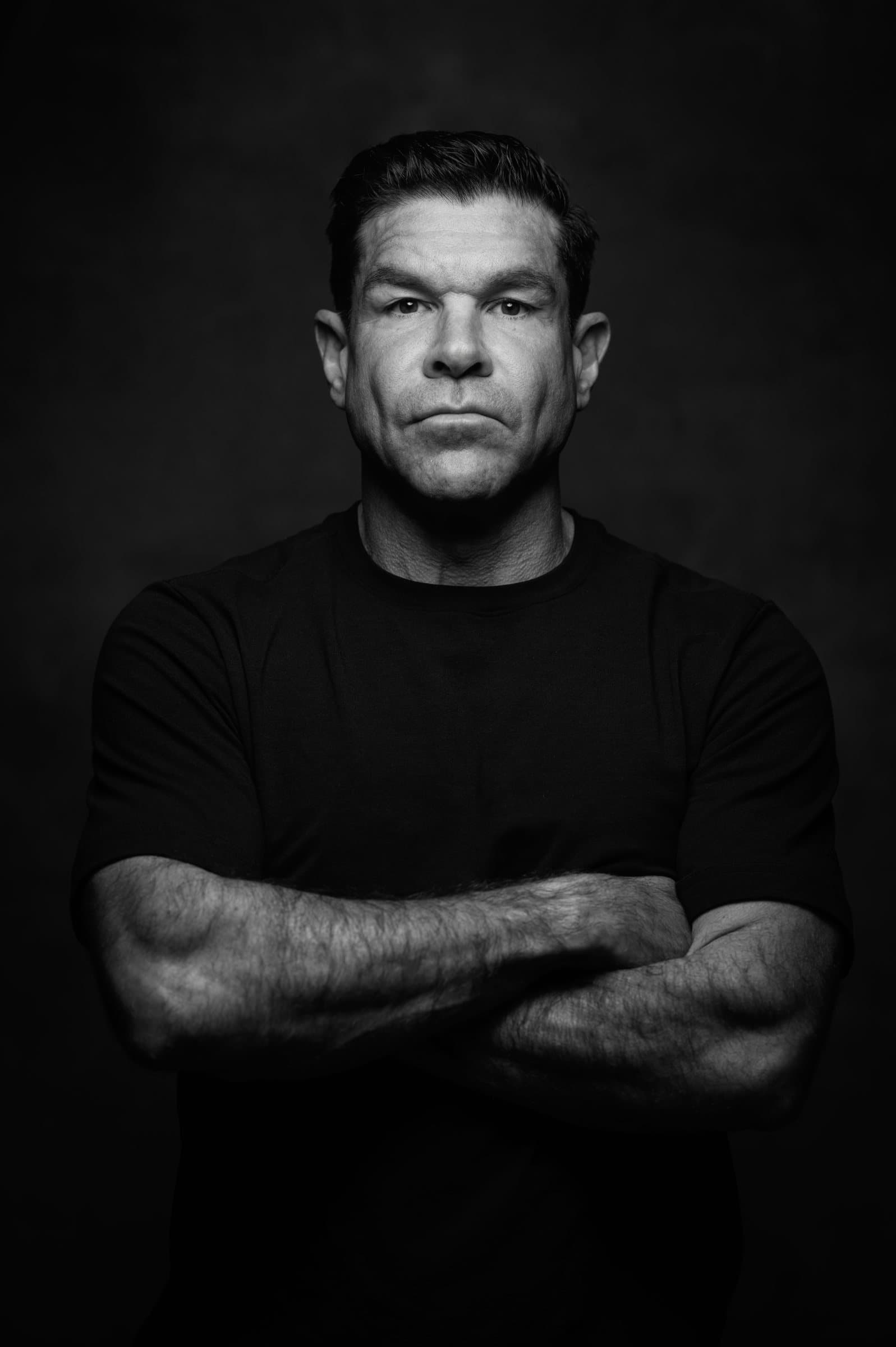
Kat Cole leads AG1 and previously held senior roles at Hooters, Cinnabon and Focus Brands.
“What took you so long?”
Summary
Kat Cole describes growing up in Jacksonville with a father whose alcoholism strained the family and a mother who left when Kat was nine. Her mother fed three daughters on $10 a week, worked several jobs and admired well-kept homes as the result of hard work. Kat sold clothes at a mall at 15, joined Hooters in high school and moved into its corporate office at 20. At 21, two senior leaders confronted her about bulimia and connected her with professional help; she links that experience to her later interest in nutrition.
After Hooters, Cole took over Cinnabon as mall and airport traffic fell. She spent 60 days in bakeries, asked staff what to stop, start and change, introduced the Minibon and expanded licensing into grocery stores. When a grocery deal broke a promise to franchisees, she ended it at a cost of millions of dollars to restore trust. Later, as COO of Focus Brands, she led through COVID, when restaurant revenue disappeared and her infant daughter was hospitalized with a respiratory virus. After leaving Focus Brands, Cole advised AG1 founder Chris as the company prepared to scale. She discusses its growth, investment in clinical trials, new products and focus on daily use.
Show notes
Kat Cole grew up in Jacksonville in a family where the men drank, the money was tight and almost nobody kept a job. When she was nine her mom left her father, worked multiple jobs and fed three girls on a $10 a week food budget for three years. Kat’s answer when her mom said they were leaving: what took you so long.
She was selling jeans in a mall at 15 to help the family, started at Hooters as a hostess in high school, and by 20 the company had moved her into the corporate office to run training and openings around the world. Vice president at 26. At 32 Roark Capital handed her Cinnabon, 400 stores and $300 million in revenue, getting beaten up by the recession. She spent her first 60 days rolling cinnamon rolls, asked every employee the same three questions, launched a smaller roll, put the brand in grocery stores and tripled it to a billion dollars. COO of the parent company at 36, nine presidents and $3 billion in revenue reporting to her. Today she runs AG1.
This week I sat down with Kat to talk about how she leads. The WTF email from a franchisee that cost her millions to make right, the two bosses who called her into an office at 21 and said we are worried about you, the unpopular calls that kept her brands alive through Covid, having her kids at 39 and 41, and the week in March 2020 when her seven month old was on a feeding tube while her franchisees screamed in her AirPods.
We also get into AG1. The founder had no idea she was already a customer, why AG1 was air freighted from New Zealand, the millions in human clinical trials, and what is coming next.
Where she came from is the whole point. Hope you guys enjoy this one.
Follow Kat: @katcoleatl
AG1: @drinkag1
Transcript
Made from YouTube's automatic captions and lightly corrected, so a few words and names may be off. Click a time to play the video from there.
Ken Rideout
All right, and today's special guest, one of the greatest female leaders in the world, the great Kat Cole.
Kat Cole
Thank you for having me.
Ken Rideout
So excited.
Kat Cole
So great to be here.
Ken Rideout
And I'm so excited to talk to you. I've been knowing about your leadership journey for so long and just dying to hear the story from you.
Kat Cole
Can't wait to get into it. Well, you know, I've been following you for a long time and I'm a huge, huge fan.
Ken Rideout
Oh, thank you. I appreciate it. Sometimes I'm surprised that anyone even knows who I am.
Kat Cole
Gobi. You're a 50-year-old in the desert, running and running and running. And separate of the winning, which is incredible, but just your story for me came out of nowhere. And the message that you've put out into the world since then, since I followed on hard, and hard work and resilience and how you share your family as a part of that, it just like speaks to my soul. So.
Ken Rideout
Oh, thank you. I tried to I tried to s- share things about the family like sense with some sensitivity, you know, with teenage kids. I always have to check with them, make sure everything's good to go. Especially now my middle son my middle son who's running, I take a picture and he's like, "Let me see that picture before you share it." I'm like, "All right." So, I try to like be very respectful of their privacy, but sometimes they like it. They like you know, they all they all have social media, so they're like, I mean, they don't all have their own social media, but they're aware of social media.
Kat Cole
Yeah.
Ken Rideout
And their friends all see it, so they'll tell them like, "Oh, I saw you on your dad's social media."
Kat Cole
Insta-famous.
Ken Rideout
Exactly. Where did you grow up?
Kat Cole
Uh Jacksonville, Florida.
Ken Rideout
How was that?
Kat Cole
Uh It was complicated. You know, I meet people and they think of Jacksonville as this beautiful beach place, the East Coast of Florida, and it is. Um but my relationship with it is is pretty tense. So, in Jacksonville where I grew up, my dad's side of the family in particular were kind of the stereotypical darker parts of the South. Um, and maybe not just the south of life and alcoholism, drugs. Most of my family, if anyone did have a job, they were good honest blue collar jobs: junkers, truckers, factory workers.
But many did not, and let's just say we're not productive members of society. And my mom was the youngest of seven kids, grew up in Jacksonville, multiple generations. Her dad died when she was three, and so we were in this really interesting situation in Jacksonville where it was a simple life in a lot of ways, but I had a bit of a tale of two cities in my own home. My mom who was loving and curious and inspirational a secretary at the time when she was having kids and what was called a secretary back then and my father who's a Vietnam vet was the only person on both sides of my family to have a fancy job.
He had a white collar job. He was an executive at an auto imports company. Jacksonville is a big auto imports town, lot of ports; and so, I grew up with a father who had more money than anyone else in the family, even though we were just upper middle class, a mom who had grown up with a really tough life, and an extended family in Jacksonville who lived more like everybody else in Jacksonville did trailers, you know, trailer parks, on if they had homes, very humble beginnings.
And when I was nine years old, my mom came to me and said, "That's it, I'm done, we're leaving," and what she meant was we were leaving my father. My father was and is a very sweet man, but at the time, terrible husband and father; had been an alcoholic for many, many years. And my mom for years thought to herself, "I should be grateful because everybody in Jacksonville, everybody in my family, has to deal with the alcoholism and the drugs and the cheating and the not coming home and the DUIs and and but none of them have a house." So, I should be grateful because my friends, extended family, they all have the situation but they have don't have the financial security that we do.
So, for many years she stayed until one day nothing worse happened just the same and another weekend he didn't come home and she just said that's it. So, she came to me and said I'm leaving. And at the age of nine I looked at her and said, "What took you so long?"
Ken Rideout
Wow.
Kat Cole
And when she and I talk about this it was this moment that I realized um what a tough decision that was for her but she realized I've been waiting for her to make that decision. And [clears throat] it's interesting when you think about on one hand she had this reinforcing belief that she was lucky. She was so lucky that she believed she had no right to try to make it different or better. And then she just flipped to the other side of that line which is just because I'm fortunate, just because it could be worse doesn't mean I don't have the right and in this case the responsibility to make it better for my three girls.
I was nine, my sisters were six and three or four.
Ken Rideout
Wow.
Kat Cole
And so, we left that weekend.
Ken Rideout
Where'd you go?
Kat Cole
A friend's house. My mom then got a small house for us. She fed us on a food budget of $10 a week for 3 years. Worked multiple jobs um which is how I started working really early. And in that window and I remember a few things. One, I don't remember my mom ever speaking ill of my father. Which is just interesting. She had every right to. If she did, I have no recollection. Um that I do believe that shaped me in a way. You can deal with stuff, you can navigate difficulty, and you don't have to spend your energy on the people who are cause of it, much less trash other people, especially to their kids.
Um the second thing I remember is how positive she was about people who had means and money, even though we didn't. And I remember driving through we had this tradition, I don't know if you ever did this when you were younger, where we would drive through the neighborhoods in the holidays and see the holiday lights. It'd be like, you know, Christmas lights and like, "Oh, it's so beautiful." And I remember my mom admiring nice homes with nice decorations. And I remember her in the car saying, "Look at that, they must have worked so hard they must have worked so hard on that." Not um "I wish we had that." Or "I can't believe your dad." Or just admiration and assuming there was hard work behind that.
And that shaped me. Like she's admiring nice things, but she's tying it to hard work. And so I remember that about her. And then I remember her being insanely resourceful and scrappy. Like bringing home scraps of meat from the butcher and stretching the big frozen meals and potted meat sandwiches and beanie weenies. And if anyone doesn't know what that is, you should look it up. It is not the pinnacle of healthy food that we all eat today. And so out of that situation with my dad and his side of the family, um with a lot of alcoholism and drug abuse and and darker things as the years would go on, there was this incredible shining light in my mom, who was independent and resourceful and brave uh and just got stuff done.
So the positive side of my memories of Jacksonville are my mom and whatever shaped her to become what she was. But I have some not so fun memories as well.
Ken Rideout
Yeah. We when and uh during the holidays we drive my wife, whether I'm there or not. Sometimes if I'm traveling, she'll take the kids cuz like sometimes I'm like, "I don't want to sit in the car for half an hour driving around looking at Christmas lights." But she'll take the kids and a bottle of wine and they drive around and they give they ring the bell of the best house with the best lights and she gives them a bottle of wine and say, "You won a Christmas light contest." And the kids love it even now as teenagers.
Kat Cole
That's so cool.
Ken Rideout
Yeah.
Kat Cole
That's really sweet.
Ken Rideout
All right, so what was your first job?
Kat Cole
My first job was working in a mall when I was 15 selling women's clothes at a women's clothing store called The Body Shop and they were famous for a brand of jean called Bongo jeans.
Ken Rideout
Yeah.
Kat Cole
Maybe it'll come back at some point.
Ken Rideout
Like a bright orange?
Kat Cole
Yeah, they were like super bright colors, coral, teal, bright yellow and the jeans and the jean shorts would match the jean vest with matching scrunchie socks and matching hair scrunchies and I was a salesperson. And I loved working in sales, but I also got 50% clothes for my sisters and I.
Ken Rideout
Oh, nice.
Kat Cole
Um so it was a very functional and practical job as someone who needed to make her own money and help the family, but it was also a ton of fun. I set sales awards when I was 15 and 16 years old, uh but that's not the first job that most people know me for. There was then a second job which was becoming a hostess at Hooters and that was the beginning of an almost 15-year career with Hooters restaurant. So technically my second job, but my first job in that stretch.
Ken Rideout
Yeah, I would I would thought you were going to say like a supermarket. That was my first job was uh I know I had a paper route, then I was at the supermarket. Slowly moving up in the pecking order.
Kat Cole
That's right. That's right.
Ken Rideout
And what was what drew what drew you to Hooters as a young girl and was your mom like, "You're not working at Hooters." What what was her feeling?
Kat Cole
No, you know what's interesting, so Hooters for anyone who doesn't know, um at the time an iconic, kind of chicken wing restaurant um focused on sports. You could go there and watch any football game, any basketball game, beer and wings. Didn't even have hard alcohol at the time. It was beer for like 20 years. And but what was iconic and different about it was the uniform of the waitresses. One, it was an all-female wait staff, so that was unique. And it's these orange shorts, so think like a little more kind of like the '80s running jogging shorts.
That is It was founded in 1983, and that is what the uniform was created from was like modern running attire. So, these orange kind of silky-looking satin running shorts and a white tank top with an owl on it, the hoo in Hooters. Yeah, funny. And so, but it started in Florida. And I when I grew up, there were several Hooters restaurants through Florida. We would go there on weekends. You'd go there to watch a football game with family or if you were in sports on the weekends, the teams would go there after.
So, if you're a Floridian at the time, it kind of wasn't a big deal. It Hooters was everywhere, it was cool. You could drive up on your boat at the Jacksonville Landing or the San Jose location and on the St. Johns River from fishing or being out. It was just kind of a Florida thing. So, my mom was just happy I had good paying jobs to pay my save up I was still in high school at the time being 17 and save up for college. I was the first person in my family to get into college.
So, it was just a restaurant. I I was so unaware of how it was viewed when people would come from outside the state and they're like, "Oh, there's these girls in tiny shorts serving chicken wings." And there was a socially acceptable sex appeal part of the concept, but when you're in it, it just felt like a cool restaurant to work in.
Ken Rideout
No, definitely from the outside looking in, I think of Hooters as girls with big boobs or hooters. I
Kat Cole
Did not have that when I was when
Ken Rideout
Like little tank tops shorts All the girls were good-looking and kind of voluptuous. That was at least the reputation.
Kat Cole
Was on the billboards.
Ken Rideout
Yeah, and then I would just think it would be just a bunch of drunk guys in there drinking beer and eating eating chicken wings and talking to the girls.
Kat Cole
It was So, I was there for almost 15 years, 14 and 1/2, but only the first two were spent in the restaurants, in the stores, because I moved into the corporate office by the time I was 20 years old. But in those few years there were so many interesting experiences. One, there were so many girls like me who moved into management. 80% or so of the hourly workforce was female. So, you think about that, it's mostly women working in there. And so, the women we ran the place.
We are the server, the product, the brand, the icon. And if you're a brand that understands that, you work really hard to take care of that staff.
Ken Rideout
Yeah.
Kat Cole
And in a way, we looked at it we were trained to look at it as almost Dallas Cowboy cheerleaders. You are here to have a look and an image, but you're also here to do a job. To serve, to take care of your staff. And so, we had a few rules like one, when women do come in, you look at women first. When children come in, you take care of children first. The concept, because it was in Florida, was so much more family. Yeah, it was dudes drinking beer watching sports, but it was also a lot of baseball teams and cheerleading squads and families that would come.
But that wasn't what was marketed about it. So, one as a woman, I and we felt very empowered there. And if you think about it, because there is a a side of that concept that's socially acceptable female sex appeal, and you know that there is a male-leaning customer base, we also had more training, more support, managers who understood and were looking out for things. You know, where you did hear about things happening in restaurants that weren't really positive.
Ken Rideout
Yeah.
Kat Cole
Not Hooters,
Yeah. Fridays, Applebee's, major chef-driven Michelin starred restaurants. So, it it's kind of ironic that the place that was known for having women in little uniforms was the place with more training, less tolerance for BS, and a bunch of empowered women. Whereas, in other restaurants and other environments, there wasn't the training. There wasn't the awareness, and so stuff happened in many places for a very long time without it being addressed. That stuff would not fly. You'd have to deal with things, of course, like you would in any restaurant, but you were more trained, you were more supported, and there was not tolerance.
And that felt very safe and empowering. And it's why so many women wanted to work there, and then why so many of us stayed and moved into management. And then you have women who've been the waitresses now running the restaurants, and then women who used to run the restaurants being vice presidents. When that happened, you have generations of people with experiences who also look to continually make it even better for the staff.
Ken Rideout
What was the transition like going from hostess, waitress, or server to now management? What were the challenges and what what did you like? What did you not like? What were you good at?
Kat Cole
Yeah, there were um there were many. Some that I couldn't have anticipated. Um one thing that was super cool is I was 20 years old working in a corporate office. I thought I was hot
Ken Rideout
Yeah.
Kat Cole
You know, and like it felt very far from where I came from. I was proud. I was wearing a polo. I was in an office. I had a cubicle. That felt like miles away from my past.
Ken Rideout
Yeah.
Kat Cole
And I was really proud. Really proud. Like anyone might have looked at me from the outside and been like, "Oh, she works for Hooters?" I would hear none of that. And so, I was I think more proud than I would have expected. And I took a lot of pride in my job and in my work and I wanted to make that brand and that restaurant even better and even more iconic than it was. So, that was surprising how much pride and responsibility I felt because I was still pretty young.
There were many people working in those restaurants who were my age or younger or older and I felt an obligation to make it great for them. So, I felt more responsibility than I would have expected. And more pride. I was also super grateful. I don't know many companies that would have plucked a 20-year-old out of their restaurants and said, "Come work in our corporate office and help run training, management, franchising, and new store openings." So, I was deeply grateful um to the company, but to my two bosses in particular at the time, Kimmy and Cheryl, two vice presidents of HR and training.
They saw me teaching workshops in the restaurants and invited me to interview for professional advancement in the company. So, I was just so grateful. There was one huge challenge that I did not anticipate, and it didn't come out until a little later. But, the first challenge that I did anticipate was just working in an office and not in the restaurants. And I'm walking around this office with people who had not worked in the restaurants. So, building relationships not by watching sports and slinging wings and taking orders and cracking crab legs, sitting down and having coffee with people.
Yeah. It's just a different way to build rapport. And so, that took me time. I wasn't natural at that and had some really great mentors from the office. But, the thing that would catch up with me maybe about a year later, um I get called into the vice president's office, and she sat me down with one of the directors, and she looked at me and like closed the door. So, imagine these two women sitting there, and she closed the door, and she said, "We're worried about you.
We think we know what's going on, and we want you to get help." And I was sitting there, and I just started bawling, crying. And what she meant was she had suspected, rightly, that I had an eating disorder. And for a very brief period of time, I'm so lucky that it was brief, I was bulimic. And I would eat and make myself throw up. I was 21 years old. And she said, "Look, um you travel around the world. You represent our company. And if I have to worry about your health and well-being, I cannot send you around the world." And she knew me.
One, think about how baller this is to have a leader who cares enough to recognize something might be going on, to be thoughtful enough to use what she knew would motivate me. She knew I loved traveling around the world doing those openings. And while she didn't threaten, she made it very clear that if I didn't take care of myself, I couldn't represent the company on the road. And I didn't say anything to acknowledge what was going on, but I said, "I will get help." So, the company connected me with a nutritionist and a psychologist who had me answer this like I don't remember how many questions it was.
It was like a 100 question survey. And she came back with a report. And the report was two parts. One part was um nutritional and medical to walk me through what would happen to my body, my hair, my skin, my teeth, my energy, my reproductive capability if I continued down this path. It was the first time that I ever had deep nutritional education was in this moment. And that scared like that scared me to death. They showed me pictures of what happens to people who go down this path and can't get out.
And the second part was a readout of my psychological analysis and behavioral analysis. And she said, "While we never know what's truly underneath when people experience this and navigate this, what it appears is you so quickly transitioned from an environment, the restaurants, where you were literally the operation. You're making things happen. If you need food, you get food. If the customer doesn't have what they need, you take care of them. You were the trainer and the leader and the boss and everything. I was the center of those restaurants.
And you immediately come here as a 20-year-old where you are behind the scenes working on training materials. You have no idea where they go, right? You're so many layers disconnected from the impact and the action that it appears you are seeking control. And this is what you can control. I was also running 10K's every weekend, working out two times a day. And it was tough for me because I was I looked so fit and healthy. I was being reinforced. People were like, "You look so great.
You're so fit. You're running these 10K's. It's amazing." Meanwhile, I had added this little layer to my routine. Fortunately, it had only been a few months. And this intervention, which it absolutely was, both scared me straight because I didn't want my health to go downhill. I was actually trying to control my health, my appearance, my everything. Um and it looked like it was going to remove my professional ability, which I loved so much. And there was something about the way that woman, that therapist, explained it that it just made sense.
Like, I don't know if you're right but it sounds right. I went from this active in the middle of the action environment to like talking to very few people in an office working on materials. And it was the understanding of what it was and that that was a very rapid transition. To the point of your question, pretty rapid transition to an extremely different environment with a lot of responsibility. But I'd moved to Atlanta for this job. I had almost no friends. I mean, I was a workaholic.
And but I loved it. The work was my job. Work was my life. So, this was this little pocket of how I could control some piece of my life. And having that intervention, it was like a light switch. Never again. And I felt so proud that I I didn't realize until I learned more that that can lead to the end of people's lives. Like people It's a It's something they battle their whole lives in many cases. [snorts] And I didn't because of Kimmy. Because of Colleen, that the two women who sat me down.
They even brought in one of my old bosses from Jacksonville, who they knew I loved, and had him sit down with me. And talk about people who cared. Demonstrating leadership, but make keeping it about the business. You know, they didn't get into my personal life. They just said, "We know this is going on. It could affect the business. We care about you. We want you to get help. We're facilitating help." And I did. And it never happened again. And I was 21 years old.
Ken Rideout
It's also amazing that they gave you a chance to fix it and didn't hold it all against you for the foreseeable future that you were still able to advance in that career.
Kat Cole
I mean, it was like it had It was like it had never happened. And they checked on me from time to time. You know, they'd ask, "How are you doing?" with that deeper look in the eye. Like, "How's it going? You doing okay?" And I'm like, "I am. Thank you." And it was on me to demonstrate they could trust me. I would hold up my end of the bargain. I'm not going to misrepresent the company, and taking care of myself is a part of being a good professional.
There's something about that little seed that eventually would grow into my absolute obsession with nutrition.
Ken Rideout
Yeah.
Kat Cole
That didn't start right then, but that feeling of nutrition as a foundation for your responsibilities, nutrition as a foundation to do what you want to do. So, I can show up for the people and pursuits I love, not just because of health. And over the years that followed, those women would move on to other careers. I became vice president in the company, stayed, helped grow the company around the world, very healthily personally, um and eventually left after 14 years. The CEO of the company died suddenly, his son took over, we had to sell the company into private equity, and I was very central in that process, and then was recruited by private equity firms to go run other restaurant chains.
Ken Rideout
It's amazing that the psychologist pointed that out pointed [clears throat] that out to you about control, cuz I talk about that with addiction all the time. At least as it pertains to my own addiction is one of the things that I get tripped up with a lot. It's like wanting to control my emotions all the time. So, if I'm feeling anxious, nervous, insecure, for years I could take opiates and be like, "Okay, I'm out of that feeling. I'm into a new feeling." But when you artificially spike your dopamine and serotonin and all these like feel-good chemicals, they become dull to everything that really matters in life, like walking on the beach in the Caribbean.
It's like everything was flat to me unless I was taking drugs.
Kat Cole
Yeah.
Ken Rideout
And it took a long time to figure that out. But like what you were just describing about it it started as a seed and grew over time. Like even at 55 I still think like I'm constantly learning things about myself and having realizations of like, "Oh my god, I've been doing I can't believe I didn't It took me so long to figure this out." And it's like it can be frustrating at times, but what I the people I really feel bad for is the people that don't realize that like you it's con- you can constantly evolve.
They get into a routine and it's just I don't know, there's no more um there's no more drive to like learn or experience new things. They just get stuck. And like you were saying, like traveling around the world and we'll get into some of your work in Africa. Like I love exotic travel. I love seeing places that people haven't seen before. It's one of the downsides with the internet. When I first moved to London, before the internet got really big, everything was so exotic. Like the thought of going to Bangkok, all I knew of Bangkok was like Indiana Jones.
I'm like, I'm going to Bangkok. Like now you're like, oh, I'm Bangkok. Let me pull it up. You can see a freaking 10 live cams. You know what I mean?
Kat Cole
Up and you go, it doesn't look like it looked like on the Instagram.
Ken Rideout
Exactly. But all right, so when Hooters was sold, where did you go from there? Private equity? You became like a
Kat Cole
Private equity um and became the CEO, the president of Cinnabon. So not yet on my health journey at all.
Ken Rideout
I was going to say when I when I was saying that I was talking to my wife about this, I was like, that would be the worst job in the world for me because I love stuff like that. I It takes It's To me, it's like drugs. I got to like be very careful cuz like I could have a bite and then be like, "F this. I'm eating a whole tray of Cinnabons." And I cinnamon buns couldn't be a like my favorite treat in the world.
I couldn't imagine working there. They're so good, but they're so bad for you.
Kat Cole
So good. So it was [snorts] again such a cool time. One, when I grew up working in malls selling clothes when I was 15, there were two concepts that we loved going to and it was Auntie Anne's and Cinnabon. Loved those smells. As high school kids, we would like treat ourselves. So I had a real like soft spot in my heart for the nostalgia of the brand. I get a call from this private equity firm who I'd been talking to about working in their firm, but the timing didn't work out.
They called me and said, "Hey, we're going to need a president of Cinnabon. This brand's got to get turned around. It's taken a real beating out of the Great Recession. It was based in only malls and airports." And in times of depressed discretionary income, there are two things people stop doing, shopping and traveling. So malls and airports had double-digit declines in revenue driven by double-digit declines in foot traffic. And so the brand was beloved, but the business was in trouble. And so they called and said, "We think you should interview." And I thought, "I'm not going to get the I...
I've worked at Hooters my whole life, and I know I can go run restaurants, but to become the president of such a large, global, iconic brand, they probably want some people who've been presidents of big businesses before."
Ken Rideout
And how big were they just for just for context?
Kat Cole
Million in revenue.
Ken Rideout
300 million, how many stores?
Kat Cole
Uh about 400 stores and a fledgling licensing business.
Ken Rideout
Got it. Okay.
Kat Cole
And so, um I then went in and became the president of Cinnabon. They hired me. And I, I, I remember I was still at Hooters at the time, and I went to the CEO, who was the son of the CEO who'd passed away while we were transitioning it into private equity, and I said, "Hey, I'm only going to tell you, but I have an opportunity to interview to go run a different restaurant chain, and I'm, I'm definitely not going to get the role." But I don't want you to hear about me interviewing from somebody else." And that was a risk, right?
He could have been like, "You're out of here."
Ken Rideout
Yeah. Would have been stupid, but yeah.
Kat Cole
And he said, he said, "Thank you for telling me. The only thing I ask is you don't leave me in a lurch." Meaning you don't just haul out of here right away if you get it. I'm like, "Don't worry, I'm never going to get offered the role." So, I did get offered um the opportunity, and so I went to him and said, "Look, they've offered me the role, but I promised I wouldn't leave you." And and he said, "I need you to stay until we sell the company." Which there was no guarantee of how long that would take.
It took 6 more months. They held the job for me.
Ken Rideout
6 months for a business that's struggling? I can't believe they waited that long.
Kat Cole
They had another leader who could help out between the brands. They ran At the time, Focus Brands had Schlotzsky's, Moe's, Carvel Ice Cream, and Cinnabon. And one of the presidents um of Carvel was like, "I can help." And they had this philosophy that I loved, which is wait for great. If you have the person, it's better to wait for great than compromise and just get somebody in. And so, that was another big lesson for me seeing how one of what is now one of the largest and top private equity firms in all of restaurants globally, how they behave around leadership, how much they value the right leader that they would wage.
Roark Capital.
Ken Rideout
Capital.
Kat Cole
Yeah.
And uh so, they held the role for me while I transitioned at Hooters, and we got an offer for the company, and that was on a Friday, and I started at Cinnabon on a Monday. And the business businesses had so many challenges being in malls and airports that it was it was quite a job to come in and turn the business around, but we did in just a few years turned it around to to being positive, and um there were three things that that we did.
One was make sure we had the right team in place. The team and the franchisees, um they were tired. You know, there'd been a lot of years of tough times. And I don't know if anyone who watches this or listens if you've ever been in a on a team or, um, in a group or in a company that goes through a losing streak where things are more red than they are green, they're harder than they are fun that takes its toll on people. And so, my first job was to come in and make sure I believed, to inject belief, and that the team who was out in the field believed, that they weren't so tired that they were negative.
And it's a we needed to be realistic, but we we shouldn't be sitting around saying, "Oh, woe is me." It was our job to make the most of this incredible brand. Even though the economy was difficult, it was difficult for almost everybody. And so, it was at least an even playing field the way I looked at it. And so, job one was inject belief. Bring it from me and the team, and the belief was genuine for me. I wasn't tired. I hadn't been there for years.
I had nothing but loving memories of this of this brand. And so, building the team, making sure they were on side and ready to go be a support to the franchisees like it was day one was job one. Uh the second was I did nothing but work in the restaurants and we called them bakeries for 60 days. Rolling cinnamon rolls, taking out the trash, and I asked everybody three questions, the same three questions. Tell me one thing we should stop doing to make the business better.
Tell me one thing we should start doing to make the business better. And then tell me one thing you would do differently if you were me to make things better. And that third question, the first one's obvious. Like so many companies and and and themselves to death. We just add add systems, add product, add routine. We very rarely prune. And when times are tight, you need to find your own pennies, your own dimes, and the best way to do that is to cut down to only what is essential.
And so the way I did that without just coming in as a leader and saying I'm just going to cut this initiative or cut these products is ask people. What is the one thing we should stop doing? What's something we're doing that doesn't add value? What's something we give to customers they throw away and don't care about? Like tell me all the things you think we could cut without hurting the business, but asking people one at a time. Then the second question is about well, what do I invest the savings from that first question?
What do I invest it in? What's the one thing we should start doing? And the third question had two jobs. One is to show people respect. I'm asking them to envision themselves as president of the company. Which shows that I believe that's a question worth asking to them. Imagine you're me. What would you do differently? It also creates some empathy because for a minute people are like, "Oh man, that is a tough That is a tough job." Um and I got answers to these questions from tons of people in a short period of time.
And the pattern that came from their answers led to one very clear insight because the answers were things like we need a cheaper product. It's the recession. Cinnamon rolls big and getting expensive for a pastry. Then we heard people say, "Oh, people are looking for smaller portions." That this was the height of the Atkins craze and the Atkins diet. And here we are like the poster child for carbs and sugar. A cinnamon roll the size of your face. And then when I asked the managers and franchisees, "What should we do differently?" They're like, "We need to be more profitable.
People need something more portable." I'm like, "Okay. People are asking for cheaper, smaller, more portable, more profitable. We should probably launch smaller portions." And so one of the key initiatives was launching and expanding a smaller cinnamon roll, the Minibon. It wasn't mini, it was just less than huge. Um and that became one of the key drivers of the brand's turnaround. The third thing was to realize that even if we turned the mall locations around, malls were only growing so much. People were only visiting malls 1.
Like 4 times a year. And it had taken us over two decades to get just a few hundred locations. We needed a different growth strategy. And so the third thing was a longer-term body of work, which was licensing. Taking our brand, our IP, and our ingredients and partnering with big CPG companies to get restaurant-branded products, Cinnabon-branded product in grocery stores, and in different restaurant chains. Those things together turned around the business in less than 18 months and led it to being a billion dollars in global revenue.
So we over tripled the revenue of the company in just a few years, profitably.
Ken Rideout
Damn, they must have loved you. I hope you tied your compensation all the way to performance.
Kat Cole
I should have. I did not have you [clears throat] as a coach back then.
Ken Rideout
Needed to be your agent.
Kat Cole
You know what was interesting then, um is they did love me. Um but there were moments where they didn't. Every leader makes mistakes. And I remember a time at Cinnabon where it was the peak of the franchisees loving me. Not only had the small portions taken hold, not only was some of the menu innovation and systems technology we put in really starting to add value. The economy just started getting better, too, right? So, you're you're a leader in good times, you get a little credit you shouldn't get.
So, they loved me. And then I get a an email from one of the franchisees that said, um "WTF?" And I thought it was a joke, cuz he's normally like a really nice guy. And so, I call him and said, "Haha, WTF?" And he said, "This is not a joke. I'm sending you another email. Open it while I'm on the phone." And in the email was a photo. And in the photo was something that would absolutely like gut me and have my heart drop into my stomach, which is it was a photo of a promise I had made the franchisees being broken.
And I had told them as we were expanding licensing and we were going into grocery chains that a new product we were launching was going to look very different from their core hero product, and it was supposed to. But something happened between my direction and what got sold into this grocery chain, and it ended up being exactly what my franchisees sell being sold for half the price. So, on the phone, I'm looking at a picture of what was not supposed to be in this grocery store, and a franchisee who loved me, um who had, up to that point, been very grateful for all of my work helping his beloved brand get turned around he said, "You're a liar." You're just like everybody else building on the franchisees' back, and you can talk to our lawyers." So, um it was one of these moments where outside of losing life and losing love, there is nothing worse than losing trust.
Ken Rideout
Yeah.
Kat Cole
And it was apparent that it was gone. And I said to him, "I need you to give me 24 hours because I know it is not acceptable for me to tell you this, but I don't know what happened. I don't know how this happened. And I need you to believe me and I'm going to figure it out. So, I get off the phone with him. I go to the sales guy who's head of the channel and passed on the three-letter acronym. WTF, like what is this?
And he looked at me and he goes, "Oh, the the little things, the different ones that you wanted them to have, they didn't want that. They wanted the big ones, so we just sent them the recipe."
Ken Rideout
Without checking with you?
Kat Cole
And I was like, and he goes, "Kat, you said to get the deal done." And in that moment, I realized a few things. One, I did want to immediately terminate his employment and throw all objects out a window, but I also recognized this is on me. Something happened where there wasn't a checkpoint. There wasn't an understanding or a belief. There should have been, right? Because that was such an egregious violation of what was committed. Um but when I went to look at all the papers, everything was within our rights, nothing was against the contract or the law.
We had the right to do it. We were selling 70,000 units a week. It was crushing. It was the right product, the right price, the right partner, but it wasn't handled right. So, I realized in some part of this process, in an effort for speed a bias for speed, action, and innovation and growth while I couldn't have predicted that one specific thing would happen and go wrong, I should have known something would, which would have then created the need for more frequent checkpoints to catch whatever would be loose.
And I didn't. We just ran fast, let's get it done, thought everyone understood the principles and the guardrails. Clearly, that was not the case. So, I went back to the franchisees, fully owned it, and said this happened on my watch. It shouldn't have. That is not what we made the deal to do. I'm going to kill the kill the deal with this retailer, which cost us millions of dollars. And this is where having a high integrity financial spark high integrity financial sponsor or investor really matters.
Because when I went to the CEO of the parent company and the private equity firm to tell them we needed to walk away from millions of dollars and pay millions of dollars in penalties to get out of this.
Ken Rideout
Yeah.
Kat Cole
Well, of course you can imagine the lawyers and the accountants were like, are you sure you need to do this? Like the franchisees aren't going to be happy, but you had every right. You didn't violate any terms or conditions. And my answer was if I am supposed to be the president of this business, if I am supposed to grow this brand with these franchisees who are in a 20-year franchise agreement, it's like a marriage. It's a business and brand marriage. We can't do it on a bedrock of no trust.
So if the bigger idea is to grow the total business, this is a small price to pay for a mistake I made in not having systems in place. And they supported me. The CEO of the parent company and the private equity firm said
Ken Rideout
They did that.
Kat Cole
High integrity. And they said we support you. And this was in my first 6 months. The the turnaround of the brand happened in the first 6 months and then this happened. And because we were pushing fast for that third bucket of innovating beyond the core. And so I went to the franchisees and said we've killed the deal. Um and they were grateful, but still a little like we're not sure if we can trust them. As the years went on we had more opportunities to expand the brand that were way more competitive and conflicting with the franchise business.
But I had learned to handle it and manage it very differently in partnership with them. And in each case those franchisees would come to me and say, look what you're doing is making us nervous. Like, you're growing this beyond our historical core, but because of how you handled that situation, we trust you." And all those innovations that happened after, those are the things that tripled the business. Those are the things that brought more profitability to the business. So, in a way, that huge leadership failure that I had was an opportunity to create a deeper connection, to behave differently, to operate with more rigor, and to show the franchisees that I had the total brand in mind, never one growth vector at the expense of another.
And that's what led to the incredible success of that brand. And then I would go on and lead other divisions within the company, and then become the COO of the parent company at the age of 36, managing 3 billion in annual revenue and nine presidents of seven brands and two operating divisions reporting to me. So, it all worked out. It was a lot of fun.
Ken Rideout
How did the um people on the ground, the franchisees and the employees in the restaurants, respond to having the president of the company working in the store, in the bakery?
Kat Cole
Most of them loved it. Um at first, well, there were two things. One, there was me working in the bakeries the first 60 days, just legit, because I'm an operator and that's how I want to find out what's going on on the ground and use that to help me with my prioritization. A year and a half later, I would go on Undercover Boss and do it again with cameras.
Ken Rideout
Oh, I was just going to ask you. That sounds like Undercover Boss.
Kat Cole
Undercover Boss with no cameras and then Undercover Boss with cameras. Yes.
And so, I would say, for the most part, employees felt really respected because I'm also not in there in like high heels and pointing around. I was in an apron, in the uniform, right alongside them. Rolling cinnamon rolls, taking out the trash, serving customers. So, that earns respect. Most people like that. And they would like to see how bad I was at some things. It's pretty funny to watch the president screw things up. And things that they were better at than me. Um On the other hand, there were some managers who were nervous.
Right? They'd think like, is she here to catch us doing things? What if she sees something she doesn't like? Am I going to get fired? They had had different interactions with generations of leadership in the past. So and I knew the way some of them reacted to me had nothing to do with me.
Ken Rideout
Yeah.
Kat Cole
It had to do with what they'd experienced in the past, and it was my job to help them understand why I was there. So when I when I would go store to store, uh manager to manager, when I introduced myself, I would take all the questions out of the room. I want to tell you why I'm here. I'm here to learn. I'm here so I can do the work with you, so you know that I care and I understand the work. I'm here to talk to customers and employees, and I'm here to make sure the decisions I make are in the best interests of our franchisees and our brand.
I'm not here to as a gotcha. Um if there's something that you feel like isn't right that I should know, you're welcome to tell me. If there's something you don't want to tell me that you want to talk to your manager about, that's cool, too. And I'm not here to get in the way. Do not let me get in the way of a customer. Don't feel weird if I am in your way, please ask me to move out of the way. Every single visit started with that conversation.
Set the tone, manage the expectations, empower them to focus on the customer and not me.
Ken Rideout
So now that after that you become the COO of of this huge restaurant conglomerate and you're still single at the time?
Kat Cole
Yes, still single. I had had um I'd been in a long-term relationship in 11 years, so I was dating very seriously dating, but not married and no kids. And so I was in that relationship until 2015, which was about halfway through my Focus Brands journey. So about the time I took over this bigger role.
Ken Rideout
Okay. And so, did you have in the back of your mind like, "Hey, am I going to have kids? Like, what's up with family? You love your job, you're a workaholic." Like, what were your thoughts on family and marriage?
Kat Cole
My My early thoughts on family were I believed I would be a mother. I just didn't know how.
Ken Rideout
Yeah.
Kat Cole
That's the only thought I had. I had never envisioned myself being obsessed with pregnancy um or traditional family life. I didn't grow up in the best family, and so none of that felt very glamorous to me. But, I did have an inspirational mom. And I did feel like I could be that person in young people's lives. But, there was a part of me that didn't know if they would actually be my kids or if I would adopt or if I would become a foster parent. I just knew I would be a mother, a mother figure to many.
But, I didn't have any specificity of when and how um and in what conditions. But, I just It was a deep knowing. I will mother someone someone's. And then on marriage I had no love for the institution because I grew up in, you know, a married family and that didn't go well, and everything I saw around me, many people weren't very happy, nor were they very healthy. And so, while I didn't begrudge it of anyone who loved it and wanted it and dreamt about it, it was not my jam.
In fact, I was in an 11-year relationship from the time I was in my mid-20s to my mid-30s, and the idea of marriage was never really even came up. And maybe that was because I was so into my work. Maybe it was because that actually wasn't my person. Um and maybe it was because I needed time to like bake in the life oven to you know, to get to that point. Um but, I felt so fulfilled. I mean, I lived I have lived an unbelievably full life.
Getting to travel around the world, you know, working at Hooters, opening franchises all over. I've seen metropolitan cities. I've gone to the best nightclubs. I partied. Like, I've lived a full life. And and I've had incredible relationships around the world as well. And it's interesting after that long-term relationship, that 11-year relationship. So, now think about it, I'm COO of this multi-billion-dollar business. I'm out of an 11-year relationship, so I'm single, which is kind of odd because all my peers are mostly dudes in their 50s and 60s.
And I'm in my mid-30s. Some of them had daughters my age. And I'm not even married yet and don't have kids yet. And so I thought at that point in my life, when I thought about companionship and the most intimate relationships, I had a vision. And my vision was, you know, maybe I'll just have a relationship on every continent, and I'll adopt some children. I'd done a lot of work in incredibly complex places and met many children who needed good homes. And so I thought, that's that's for me.
I'm going to have this like wild love life of people all over the world, and I'll adopt children and be a single mom. My mom was a single mom. I can do it. Uh which was a crazy thought cuz it's a really hard thing to do. And so that was in my mind in my mid-30s when I was in this huge job. But it was weird to try to go on a date or meet someone. Like, what am I going to do as a president and CEO?
Just go like sit at a bar and wait to meet a dude? And I'm too busy traveling around the world. So, on one hand, I had these visions of this really creative free-form family life. But I wasn't dedicating the time to try to do it. And then I was invited to this entrepreneurs weekend and met the love of my life, who's now my husband. Just 6 months, 6 7 months after I was out of that long-term relationship. And we've been together for 11 years.
Ken Rideout
And you knew immediately when you met him?
Kat Cole
I mean, immediately. I We were sitting in Baltimore. We were at an event where the police chief uh from Baltimore and a community leader who had navigated the riots. This was just after the Baltimore riots.
Ken Rideout
Yep.
Kat Cole
And so we were in a community center learning about community healing and leadership in times of high conflict. And so the police chief is sitting here and the community leader sitting here and they're talking to each other and there's I'm on this side and I look across and see the rows of other participants in this weekend's event and I see this guy. And I look at him and I thought, I know him, but I have definitely never met him. And it was this deep sense of familiarity in like my head, my heart, and my stomach.
It was butterflies times 10. It was quite distracting amidst a very serious conversation. So the um you know, the event goes on and we end up at an after-party and if you had a time-lapse video of that night, we would look like two magnets who got close together and never separated. And we proposed to each other 2 weeks later.
Ken Rideout
The wow.
Kat Cole
Yeah.
Ken Rideout
And he's an ultra-endurance athlete.
Kat Cole
He is an ultra ultra-endurance athlete in pursuit of being one of the He would be the fourth person, I believe, to circumnavigate the globe on only human power, which means row the oceans in a rowboat, no motor, and cycle the continents. And so he has rowed the Atlantic, he has rowed the Caribbean in two parts after having to be rescued and almost dying, and he is almost complete with his US cycle and is plotting his Pacific row. And this is a hobby. He's an investor by day, um but he plans these big events every few years and um it's a joy for our family to be a part of it.
And I don't do these crazy things. I like to say I'm adventure adjacent.
Ken Rideout
I don't know how it would be a joy thinking, "Okay, he's halfway across the Atlantic Ocean and there's like, you know, a storm coming and he's only rowing." Like, I don't think he's going to outrun a storm, meaning the storm's going to get him one way or the other.
Kat Cole
Yeah, they capsize. The boats are great, though. They self-right, carbon fiber, looks like a an open canoe, ocean rowing vessel, it's a very specific type of vessel. I think I felt joy for him in these. One, I trust the vessel. I went through training when he first did the Atlantic row and the family training was fantastic. And they said, "Look, this boat can get cut in half. It's not going to sink."
Ken Rideout
Okay.
Kat Cole
But if he becomes untethered, say goodbye.
Ken Rideout
Yeah.
Kat Cole
Like, there's there's no coming back in the middle of the ocean. So, I had to trust the vessel and trust the training and trust him. I also know he is at his best when he is pursuing something and training for something. And usually the training for these things takes more time than the event itself. And then the time away, that part sucks.
Ken Rideout
Yeah.
Kat Cole
But it's also cool, you know, where it's like, "This is pretty amazing what you're doing." And now that we have kids, the first endeavor we didn't have kids.
Ken Rideout
Yeah.
Kat Cole
The second row we did and that's when he almost died. And um and had to be rescued. And he questioned himself having these wild pursuits more than I did at that point. He's like, "I'm an idiot. We have two little kids. What am I thinking? Why am I doing this?" And I'm like, "You know, you know your why.
Ken Rideout
Yeah.
Kat Cole
It is the pursuit. It is the journey. It's the joy. There's a lot worse habits you could have.
Ken Rideout
That's true.
Kat Cole
Up with it. I know what worse habits look like. So, in a way, I'm kind of like, "This is your thing?
Ken Rideout
Yeah.
Kat Cole
This is the bad? I'll take it all day long. And the kids, you know, it's so cool. Now, when he as time goes on, the rows are going to get longer. The second leg of the Pacific it will be over 100 days. I'm not looking forward to that. But I focus on the you know, the near term where it's like 30 to 45 days.
Ken Rideout
Yeah. So, how long were you in that CEO role?
Kat Cole
4 years. 4 years. Uh we went through and it's interesting. My first year with Focus Brands as president of Cinnabon was the great recession.
Ken Rideout
Yep.
Kat Cole
My last year was COVID.
Ken Rideout
Oh my god.
Kat Cole
So, I'm a disaster to disaster leader. Uh trough, peak, trough for the industry. Um and in the last few years there we acquired several businesses. We acquired Auntie Anne's, Jamba Juice took it private from being public and made it much healthier. Um acquired McAlister's Deli and extended our partnership with Seattle's Best Coffee. So, the the portfolio itself doubled
Ken Rideout
Mhm.
Kat Cole
In that time through M&A. And had the opportunity to lead and develop an incredible number of leaders who were either became their first-time presidents or CEOs in our company or I hired, developed, or fired them into their first CEO role somewhere else. Um and I'm I'm that decade is something I'm incredibly proud of. Right? Multiple brands navigating very different journeys of finding who they were in a rapidly changing world. Technological innovation, uh third-party delivery, the convenience economy where people cared for a time more about the food being shipped to them than the experience in the restaurants.
You built million millions of dollars building. But all through there were three threads. Um one was I love franchising. I love small business. I love entrepreneurs and founders. Um I have such respect for people who build something that endures. It is really really hard. And I have no desire to be a founder. No desire.
Ken Rideout
Interesting.
Kat Cole
A zero-to-one person. I don't want to be on the cover of a magazine as the founder of. It doesn't mean I never will. Maybe I'll be like Oprah and then like 50, I'll come up with something really cool. But I I just have such deep respect bordering on reverence
Ken Rideout
Mhm.
Kat Cole
For the eat glass experience that entrepreneurship is and truly being a founder, bringing your vision to life and then scaling it. And most of the brands we bought um we acquired at a very mature state from their founders and bringing them into more capable corporate ownership, applying systems to scale the businesses. But there's also an art to protecting the founder energy, what makes a brand special, what keeps it unique and not homogenizing it in like a corporate framework. And so, in that trough, peak, trough period, I got to work with franchisees all over the world, over 60 countries.
Managed brands from I like to call it "fun for you," which was our sugar brands, to truly "better for you": Moe's Southwest Grill, Schlotzsky's, salad, soup chains where you could really eat healthy, and at a time where people started actually eating in the way they would answer surveys. Before it was, "I want healthy." That's not the way anybody ate.
Ken Rideout
Yeah.
Kat Cole
Around 2015, '16, it actually tipped. People started choosing healthier items. They actually started looking for lower sugar and more protein and cleaner label. And we had a few brands that could really lean into that consumer experience. And so I had a chance to nurture that nutrition seed that was growing in me over time. While we had these fun brands, I also had tools in the nutrition toolbox to bring higher protein, more healthful food to millions. And then COVID hit and 100% of our revenue was decimated overnight.
No revenue, all the costs. Luckily, we had a fortress balance sheet. We didn't need to take money from anywhere. We could support our own operations and support our franchisees and give them the breathing room to navigate their near-term crisis. And um we just had a laser focus. Protect people. Protect cash. It's the only thing we It's the only job we have. We protect people which also meant safety of customers, but protect our employees, pay them as much as we can as long as we can.
Ken Rideout
Yeah.
Kat Cole
Um and that got us through. But what really got us through COVID and the end of that trough was all the painful stuff that happened in the good times. So, while the good times were happening, revenue growth, we're acquiring brands, you know, we're on the covers of magazines, we're like the hottest franchise brands, there were real fights happening in the business because we were implementing technology before it was popular. We were innovating more healthful menus before it was cool. When you're doing something and driving innovation before it's mass, there doesn't feel like there's an ROI.
It's easily questioned. Why are we doing this? Sales are good. Why are we doing this thing? Why would we invite drivers to come pick up our food and pay them 30% of every dollar? That was DoorDash. That was Uber Eats. Franchisees hated it. Hated it. They're like, "I don't trust that guy. He doesn't work for me and I'm not giving him 30 cents. I barely make 20 cents on the dollar." He was crazy like fights, threatening to sue us
Ken Rideout
Yeah.
Kat Cole
As a parent company, but being the parent means doing the right thing for the future
Ken Rideout
Yeah.
Kat Cole
Even if it's unpopular. And so, in that 10 years, right in the middle, were actually some of my most painful decisions that were the least popular at the time that caused the most legal and relationship strain because it didn't feel like we needed to do it then. No one could have predicted, and certainly not me, that several years later COVID would hit, shut down the industry, and the only restaurants that could open back up quickly would be the ones with the very technology, the very delivery, the very menu systems that we had painfully put in place years earlier.
And so, our brands just crushed coming out of COVID. Our franchisees absolutely flew, and that's when I knew my time here is done. Like, my time in franchising, it wasn't COVID. It was the year after. Once the franchisees turned around, once we reset the business, once I saw that all that work for early product innovation had actually added value, now it's time for me to focus on where my heart is, which was health and nutrition. I'd been angel investing behind the scenes in health businesses. I'd been trying to make these huge mass-market brands super healthy.
That's like turning the Titanic.
Yeah. You can maybe make it 10% better.
Um and at least keep it viable. And so, after 10 years at Focus Brands, it was time for me to take a break and lean into health, nutrition, and better-for-you CPG, which is how I ended up at AG1.
Ken Rideout
Did you have a job lined up when you left, or you just left to take some time off?
Kat Cole
Left to take time off. I'd had kids later in life. So, when my husband and I met, he rowed across the Atlantic. He came back. We tattooed our rings. We got married at Burning Man, and we started having babies. Uh but, that also
Ken Rideout
At Burning Man?
Kat Cole
Got married at Burning Man. That's right. Uh we met in October of 2015. He rowed the Atlantic in December, January, February of 2015 and 16, and then we got married uh at the burn in 2016. And um we got pregnant right away, and then I had a miscarriage. And my husband, being 8 years younger than me, was a little nervous about having kids. Like, "Hey, we haven't even had time together. I'm a 29-year He was 30 by that point. I'm just 30 years old. Like, I don't know." And the minute we had our first miscarriage, will be the first of three, he just flipped his tune and was like, "I didn't think I wanted kids this soon, but now that I'm realizing it's not guaranteed, I want to have a family with you." And we got pregnant the next time we tried with our son Ocean who was born in September of 2017.
And then multiple miscarriages after in an attempt to give him a sibling. And then my daughter Arrow was born in 2019. So I had my kids at 39 and 41. And several miscarriages in between all while I'm running these huge businesses. And so I was just ready to take a pause. And the pause and leaving you know, actively running a business for the first time since I was a teenager was not so much about a break because as my husband will say it was the busiest break anyone's ever taken.
But it was more about where do I want to invest my energy? What do I want to help grow in the world? And this was 2021. So I thought maybe I should raise a fund. Everybody was raising a fund back then. Everybody was in my ear, you could raise a couple hundred million dollars and invest in franchising your health. Do I want to go run something bigger than I've run it? Had a bunch of people telling me you ran this business and then a bigger one and a bigger one, you should keep running bigger ones.
And I thought is bigger important? Feels fancy. Um and then I started advising founders. I thought that's a good way to stay busy. I'll help founders at the growth stage uh to professionalize their business with leadership, with brand. And one of those founders I ended up advising was Chris, the founder of AG1. So it was less about taking a break and more about finding where my energy really felt right for the next chapter. And I did have two little kids at home. And another pretty tough thing had happened in the year prior.
So my uh daughter Arrow um in March of 2020, so right as COVID was hitting uh got very sick. And so we had a two-year-old at home, Ocean, and uh Arrow she had had some It seemed like a hard time breathing since she was a baby, but it was never bad enough to have something significant be diagnosed. The doctors just said, "It's RAD, reactive airway disease." This is what they call asthma before it's asthma. And I thought, "Doesn't seem right. She's not wheezy. There's not It's It's only when she gets a runny nose.
Only when she gets a respiratory virus, it like goes from everything's fine to we're in the ER." And she ended up in the ER in March of 2020 right as COVID was hitting. Nursing shortage, quarantining cuz there were no tests, and she turns out she had a respiratory virus, not COVID, something called HMPV. And she was just too little. She was 7 months old and it's just a gnarly, nasty, mucussy respiratory virus and she couldn't clear it. And she ended up on respiratory support, a feeding tube, NG NG tube.
Almost died twice from respiratory distress. And I I remember being in the hospital room. So So thanks, March 1st week, March of 2020, and she's 7 months old. Like the pictures will tear you apart. She's in this like sweet little like baby crib thing with all these tubes in her nose and it's hectic, right? The nurses are coming in and out and I have AirPods with my franchisees freaking out. And my husband's also working and taking care of our son at home. And so he and I would take shifts when we could, but I needed to work while I was in there.
And so the franchisees are freaking out. We're navigating like finding gloves was like the Hunger Games, you know, everybody's like, "I got a guy who can make sanitizer. He's got a brewery in his backyard." It was a really wild time when you're used to being a sturdy leader and having most of the answers for your franchisees, for the brand, for operating procedures to no one knows what they're doing. And so we're going to make our best choices and then I'm going to guide you to your hyper-local guidelines because they may vary wildly from what I'm seeing over here.
People were getting in fistfights over masks. Like it was crazy times.
And I remember the franchisees yelling in my ears in my AirPods, looking at my daughter, making sure the nurses didn't jack her oxygen up to 10, which is what sent her into respiratory arrest once, and having tears in my eyes, and just feeling the stress, the weight. And then I just thought I had this voice, and I thought, "I'm glad it's me. I'm glad it's me. Nobody's going to fight for my daughter more than I am. No one's going to fight for these franchisees more than me.
I've been in this business my whole life. I'm not going to let them flail." And it was just this wellspring of mama bear energy. It's the only thing I can I don't know, sense of responsibility, a sense of gratitude that I had the opportunity to make decisions to help the helpless in in many cases. And in those weeks that followed, my daughter got better. The support helped. Had to take her home with an NG tube and learn how to put that thing back in when she would pull it out.
And she was okay. And my franchisees thrived once business opened back up because of our innovation. And it was this crazy like things were awesome. And then they were horrible. And I was in tears every night because I was so tired, but yet empowering. Like I have to do this. I'm so glad it's me. It's my responsibility. It's my privilege to take care of people. And if I don't, who will? Um and and then for it to get so much better. And so that was also a little bit behind me saying, "It's time for me to do something different." I'm able to be here for my daughter.
She's doing great. Turned out she did have airway dysfunction, not asthma. Um and so I became a little bit of a pseudo go down the rabbit hole absolute freak about the airway, nasal breathing, tongue mobility. Um and she's been through years of therapy and is now better.
Ken Rideout
Oh, good.
Kat Cole
Yeah. So, it in 2021 was the time to get serious about her airway. Now that I realized, "Oh, she couldn't fight that virus because she can't breathe and she can barely swallow and she would have many surgeries." She would have surgery, she aspirated pumpkin seeds, she could barely swallow. Um So [clears throat], that year allowed me to figure out where should I put my energy for my family and for my business and health. The remind Oh, and my mom had breast cancer that year, also.
Um my incredible incredible mom who raised three daughters on her own. And um so, all of a sudden in that year, health became my North Star. My health so I could be strong for my mom's health, my daughter's health. I have my husband who's this incredible perfor- high-performance athlete and human who also cares deeply about nutrition and health. And so, I I then became obsessed with nutrition. That included fitness, supplementation, whole a more of a whole food diet, maybe a few fewer Cinnabons. Um and that time period in my life matched up with getting connected to be an advisor to the founder of AG1.
Ken Rideout
That's all those stories remind me of this expression that a rich person has a million problems, a sick person has one.
Kat Cole
One.
Ken Rideout
Cuz when someone gets sick, like my wife just had breast cancer last year and it was it was horrible. Makes me emotional just thinking about it now. It was so stressful and she was good, thank God. It was just stage one and it was the best case scenario for breast cancer, but still it was I just remember thinking I'd rather have terminal cancer than watch her go through even curable cancer. It was it sucked. But so, when you when you were advising the Chris at AG1, what were What are of the challenges that he was facing at the time?
Kat Cole
Yeah. So, this was uh March of '21.
Ken Rideout
Mhm.
Kat Cole
And or May of '21. So, just 2 months after Ara had been in the hospital and she was great. He reached out to a mutual friend and said, "Hey, heard Kat um on a podcast talking about branding and leadership. And our business is growing like crazy. Could you introduce me to her?" He had no idea I'd been a customer for 2 years.
Ken Rideout
Okay.
Kat Cole
So, our mutual friend connects us. And I said, "Oh, I'm I'm a customer. I'm such a fan of this product. It helped my gut health, my energy, my immune health." I mean, truly, I just felt like everybody else is getting sick and I'm feeling pretty good and my energy is really good. I love coffee, but I felt like I didn't need it as much. And I was such a fan of this product. And because my husband confronted me and walked me into our pantry and looked at all the pills and powders I had from Whole Foods and pointed out that they were half expired and that I wasn't sticking with it.
And so, he's like, "Try this." And the try this was AG1. Um and as just a simple step, it helped me personally so much. So, when the founder asked for a phone call to talk about business, I thought, "How cool is this? I get to help a company, you know, of a product I really love." So, I get on the phone with him and he shares a few things about where they were in the journey, which as a customer I had no idea about. I didn't know how big or small the company was.
Um I didn't know how it was funded. And so, up to that point, AG1 had been completely bootstrapped. Chris had founded the company and bootstrapped the business. And he was at the beginning of starting his first ever fundraise. Um it was growing at multiples, not percent. I think the previous year year-over-year growth was like 160% and that year it would go on to do 160 million in revenue. Not profitably because he was taking every dollar that the business generated and plowed it into growth, expansion, and supply chain, just supply.
We were only being manufactured out of New Zealand at the time. I think there was a moment where we were a top-five export, non-commodity export from New Zealand, because we were air freighting. Chris was air freighting green powder. And people may think that's a crazy business decision. You put stuff on boats, right? It's more economical. Not if you understand the cash conversion cycle and you need to turn that inventory into revenue as quickly as possible, even if it makes it less profitable. So, he made those decisions to serve the demand that was growing, built from a decade of fairly steady, but not as explosive as hyperbolic growth.
Just a lot of people who love this product, who told their friends, trainers, um people who eventually would become well-known figures, but early on were just AG1 fans. And then all of a sudden COVID hit and accelerated the entire category, but many of those businesses crashed after COVID. This kept growing, because it was that good of a product. When it gets in even more people's hands, now you have more advocates. So, Chris knew he needed to help the company grow up in systems and professionalization as he was looking at raising institutional capital, outside capital for the first time.
He also knew at the time the business was about 60/40 male/female, um so, slightly more male, but was becoming more female. It was just happening organically. People who were athletes would be giving it to their moms or their daughters, and so, the business now was on track to do 160 million, almost heading toward an equal gender split; needed a bit of an evolution of its branding to appeal to a broader audience from the old-school Athletic Greens days. And so, he he knew he had branding challenges and opportunities.
He knew that the team that helped get from zero to 50 million might not all be the team to get from 160 to 300 to 500. So, there was a leadership question that he had, operating systems, and it was a fully remote company from inception, never had a headquarters. And that just makes all of the leadership stuff a little different.
Ken Rideout
Yeah.
Kat Cole
And so, those were the things that were challenges for him. Growth was not a challenge. People truly loving the product was not a challenge. And having a high-quality product was not a challenge. But telling that story, building a brand around it, and building a team of capabilities that could fuel the growth beyond the COVID tailwind, that he knew he needed help with. And that's when he called.
Ken Rideout
He also did a good job with the marketing by having Tim Ferriss. I can remember Tim Ferriss back in the day being like, "People ask me about my supplements. If I could only take one." I just remember that being like, "Oh, that was when I became aware of it." And then with the Huberman partnership, who's a good friend of mine, and and Rob Moore started sending me the product, and I was like, "Wow, this stuff is really good."
Kat Cole
Yeah.
Ken Rideout
And it was you can tell how good it is because now you can see all the uh imitators popping up everywhere. And it's crazy they can change the color, change the letters. I mean, they're not even changing the like three-letter acronym. It's just like they're everywhere.
Kat Cole
Yeah, it is. On one hand, it is um well, first I'll say you're right. One of the things Chris did so thoughtfully is the people in his community who were early AG1 fans who then started their own businesses and communities. Tim writing his book. I mean, Tim's been an AG1 drinker and partner since the founding, 2010. And he put AG1 in the 4-Hour Body. And Chris at the time was actually entertaining changing the name. He had already felt like maybe greens would be limiting because it's so much more than greens.
And that while athletic has real resonance and power, that that also could be limiting. So, he called The story goes, so I hear, that he called Tim and was like, I think I want to change the name from Athletic Greens to something else. And Tim goes, "Dude, you can't. I put it in the book."
Ken Rideout
Yeah.
Kat Cole
And so, something always kept coming up that another customer, you know, whether it was Huberman or Rogan or Tim or others Chris, they were such AG1 fans. Then they developed these huge communities, newsletters, books, podcasts. And the one thing Chris did incredibly well was he stood so clearly as their partner. And anyone in our company will tell you we have a two-customer strategy. It is our actual customers and it is our business partners. And that if they have a need we need to do whatever we can that is within what is right for the business and our customers to truly support those who support us.
He was so early to supporting podcasts. No brands were investing in podcasts at the time. But he was early because he had that partnership any trainers or people who would recommend the product, he would make it so connected from a relationship standpoint and ensure they felt valued so that there was never any question that this is a mutually beneficial partnership. That's in the DNA of the company. And so he was he was early, he was ahead of his time, and it was a high-integrity approach to relationships.
And some of those people just became really famous and with massive platforms. And then that ripples, right? You just said Huberman and Rob, then they send product to you.
Ken Rideout
Yeah.
Kat Cole
They don't do that if they don't A love the product and B feel like they're proud of the brand and the partnership. And that that has happened over over the decades. And but yes, there is certainly a clear signal that this brand has created a movement, a market, and a category when there are 8 million look-alikes that enter the market. And so on one hand, you're like, "Oh gosh, another one, a purple one, a a pink one, a whatever. Um, on the other hand, it's like, okay, we we have created a category and that gives you no right to the to the customer.
It is how can we look at everything happening in the industry to make us better? And while I did not anticipate the speed and volume of the competitive environment, what I did anticipate a few years in is that the growing category of which the growing competitors are a symbol, the growing category was driven by growing consumer demand. And with more entrants coming into the market, it was so clear that an already cloudy industry was going to become less clear. For those of us who get marketed to, more confusing, harder to know what's good.
And it it was really clear in 2022, so I'd been there about a year and a half, that outside of standing up our supply chain, getting blending stood up in the US, which we did. So all US product is blended in the US. Um, and New Zealand blends for Asia and then we have blending facilities in Europe for the European business. Outside of getting ops just like locked, incredible supply chain team, best QA in the industry, it was clear that more science and human clinical trials, even though that's used to be reserved for pharmaceuticals, that some version of that was going to be required on the full formula, not just the ingredients, because the customer deserved it for a premium supplement.
And so from 22 to 24, we invested over 10 million dollars in human clinical trials, research, quality and innovation to level up the product, improve, uh, follow the science, run multiple double-blind randomized placebo-controlled human trials on the full formula, so that there was extra evidence and backing behind anything that we would claim. Not just the testimonials of customer cuz we're all different. Something AG1 does for you, it might do a little less for me. But we needed that human trial rigor and that commitment to be able to stand up to what the consumer deserves.
Now, what I didn't know, kind of like the technology investments at Focus Brands, is that it would pay off in a different way, which is when more competitors came that actually having the receipts of more human trial evidence would be very helpful in the distinction between what has more evidence and more proof versus what doesn't.
Ken Rideout
Well, I can tell you from experience when I had the co-hosted the fight with Teddy Atlas, we AG1 was an early sponsor and every even now when I go sometimes to raises or events, people are like, "I still have my AG1 subscription from when you guys were doing this like in 2018."
Kat Cole
Oh my gosh.
Ken Rideout
The in that time I've worked with a few different brands and tried a few different of the competitors, but the one that I always continued to purchase was Athletic Greens. And it's the one that like genuinely I feel like is a daily essential. It doesn't have like longevity claims and some of that stuff is very hard to track, but it's just like a good insurance policy to make sure you're getting all your like daily essentials. That's how I look at it. And now with four teenage kids, I'm like beating them over the head cuz they they're still they're still at that age where they're not like very aware of their physique, let's say.
And they're just kind of like, "I'd rather have a Cinnabon." But I'm like, "Guys, this stuff is important, especially as like some of them are starting to run cross country now." So now they all have to take their Athletic Greens in the morning. They're all taking their creatine. Like they're on the whole thing. And even if they do it reluctantly, I'm like, "Trust me." Cuz even there was just a study that came out with creatine and I forget what the duration of the study was, but it was like a double blind placebo of uh g of creatine and people in the study over a course of months gained 2.2 lb of lean muscle mass with no exercise compared with the placebo group, which is crazy.
Kat Cole
Yeah.
Ken Rideout
I mean, it doesn't even seem real, but it's that that's a real study.
Kat Cole
It's so wild that they're And and I did not appreciate, I appreciated it as a student of the industry, as someone who became personally obsessed with nutrition, but once I got in the industry and spent more time reading these trials and working with some of the best experts in the world, it is under-appreciated and undervalued how the basics of some of these key nutrients, vitamins, minerals, micronutrients, and macronutrients, the creatines, the vegetable blends, probiotics, prebiotics, a good methylated B complex like these are actually things that don't naturally occur in our bodies.
And creatine is such an interesting one because to get the equivalent of creatine that's in powder, you would have to eat some ungod- like unholy amount of meat.
Ken Rideout
Yeah.
Kat Cole
Like the weight of half of your body or something. I don't know what the stuff what the the stats are, but
Ken Rideout
Resveratrol in our wine. You have to drink like a a barrel a day.
Kat Cole
Exactly. And so, the argument of yeah, but we lived for centuries without supplements, we also lived without a lot of other things, like modern stressors and things.
Ken Rideout
Age 100 years ago was like 35.
Kat Cole
And so, we're getting more out of our bodies. We're demanding more from our bodies, yet at the same time, our food is not as nutrient dense as it once was.
Ken Rideout
That's right.
Kat Cole
Certain things that people may take, it might be a pharmacological intervention, so a prescription or even a GLP-1, um or even things we may consume, like caffeine, they actually deplete minerals from our body. There's tons of research on this stuff, and it doesn't mean it's the end of the world if you have to take a pharmaceutical or if you drink a lot of coffee, you just need to know the trade-offs and then use the tools that are as natural as possible with the highest safety profile possible to fill those gaps, to replenish what is diminished from modern life.
Again, whether that's a medicine or stress or just what our diets don't provide. And it's why AG1 was so helpful to me. I don't know what my gaps were. I wasn't doing the blood testing and microbiome testing at the time. But my gaps matched up with some number of things in AG1 at the time and my gut health, my energy and just overall vitality. And as I talked to some of our partners and the doctors who are advisors for our innovation, what I like um that I'm hearing people talk about now is less um try to live as many like longevity live forever.
And I really respect the study and the academic pursuit of understanding human potential.
Ken Rideout
Yeah.
Kat Cole
And pushing the limits of it. But I do not advocate for doing it at the expense of a quality of life.
And there are some really basic things that most of us can do um that enhance the amount of life in our years that then can add up to healthier years in our life. And the stuff in AG1 and the high quality approach to it and things like creatine or a high quality protein, it's not that crazy. Right? It's like it has a high safety profile. So, if it has a high potential benefit and a low potential negative, it's certainly better than some other things people could go try to do.
Then it's all right, what works for me? And just like Tim used to say in 2010 and still today that if I can only take one thing. Look, most people have many people have the ability to take many things now. But still AG1 simplifies the stack to one foundation. It's not an all-in-one, but it's a most-in-one that if you could only take one, it covers nutrients and gut health. But then we launched a version of AG1 with creatine.
Ken Rideout
Oh, really?
Kat Cole
Yeah, AG1 Pro to say for those who want more, who follow the science, who want to keep simplifying the stack, we now have AG1 Pro with creatine in it. And that was not only a part of our innovation roadmap to follow the science, but we surveyed our subscribers. 36% of our subscribers last year were adding creatine to their AG1. If that's not a screaming signal, we should probably make a version of AG1. People are like, "Oh, that's so brilliant." Like it's not very brilliant. Our customers told us we probably should have done it earlier and we can't keep it in stock.
Ken Rideout
I'm always surprised some protein powders don't have creatine mixed in them. Like I'm surprised there isn't like an all-in-one cuz I mix it in with like my recovery drink after I work out. I take two scoops of recovery powder from Momentous and I put in creatine and AG1. And I shake it up and see it that's it. Every every single day after I run for years, that's what I've done.
Kat Cole
I'm seeing more single serve start to add it, like a ready-to-drink versions or small travel packs. In a big tub, it'd probably be hard cuz creatine is so it's like a fluffy cloud.
Ken Rideout
Yes.
Kat Cole
Getting it dispersed evenly through protein in a bulk container
Ken Rideout
That's probably why.
Kat Cole
That's prob That's probably why, at least on the bulk side. But even for us, like as we've listened to our customers and followed the science, it's people want AG1, but now some people want a version with creatine in it. Not everyone does. Some people want to make it on their own or they want to add more. We have 5 g of Creavitalis in our in AG1 Pro. But for people who want 10 g, we're launching our own creatine as well. Um but people have favorite brands that they love.
We have a version of AG1 now with um plant-based caffeine and L-theanine for mental focus lock-in.
And so now, while we do one thing really well, we're doing versions of it with research-backed ingredients because we're also wanting to serve people with different needs, but keep the stack as simple as possible. If the stack is simple, you stick with the routine. If you stick with the routine, you get the benefits. Like you have professed in so much of your work, in your book, in your conversations, like it's just about the consistency. You can't drink AG1 once and, you know, have magical powers, uh, or any supplement for that matter.
But consistent daily use, our our one of our vision statements is, we make the most trusted daily nutrition products, organized, um, formulated for safe, effective, long-term daily use because consistency matters. Um, it's a joy to be a part of it. And I geek out on the science, too. I'm not a scientist, but I get to work with some of the best in the world. And formulating these very simple, but high-quality formulas, um, it is an art and a science, and I take it very seriously that it's going in my mom's body.
Ken Rideout
Yeah.
Kat Cole
And your body.
Ken Rideout
Mhm.
Kat Cole
And your family, and mine. And so, there is an incredible body of work and an even more incredible team behind the formula, the science, and the production to make sure that quality and that NSF for Sport Certified third-party verification of what's on the label is in that product at all times that that is maintained years into our existence.
Ken Rideout
You're right about the consistency. That's the key, cuz if you miss a day here and there, it's not the end of the world. But at the same time, you shouldn't expect to take something for a week and be like, "Oh my god, I have It's magic." And recently, I was telling you I went down to Mexico and did uh ibogaine. And one of the things that they talk about is this is like a small course shift in like like a sailboat. You're not going to make a 180° turn, but this could put you on a course like five five degrees difference and in two a year a month, you're going to be in a much different place.
Kat Cole
Love that.
Ken Rideout
But it all has to do with how you integrate the changes. So if you're just taking AG1 and then drinking every night, you shouldn't expect results. But if you're exercising consistently and it doesn't have to be obsessive or religious, but if you're exercising at least three or four days a week as they say you should and you're taking the right supplements, and you're covering all your bases and limiting alcohol and all the other that's bad for you.
Kat Cole
Totally.
Ken Rideout
Like you should expect a small degree a small course correction and over the course of time you'll notice those changes, but nothing is going to like magically change your life overnight.
Kat Cole
No.
Ken Rideout
But consistent good behaviors will, and I think one of the things that AG1 for me has done is give a small course correction to like offset any other like deficiencies I'm having in my diet and making sure it's like I've always, I always said when we were on the uh the podcast with Teddy Atlas, I would be like, "This is like an insurance policy to make sure you're getting the basic nutrients that you need like these minerals, etc."
Kat Cole
Yeah, I mean what It it's interesting as the conversation around longevity has exploded. But the foundation of your health is the foundation of the longevity movement. No amount of super supplements or injections or anything that you put in your body is going to add much value, maybe not any if your gut is wrecked, you have massive nutrient deficiencies, right? Maybe it'll be a band-aid, maybe in some cases, but this idea of having a high-quality foundation and then building on that foundation consistently it is the sauce.
Ken Rideout
Yeah.
Kat Cole
Like that is the longevity movement is having that foundation of what you put on it so strong and this idea of just habit stacking. I love hearing from our customers who say, "Well, now that I drink my AG1 in the morning, I'm less likely to smash a donut at 10:00 a.m."
Ken Rideout
Yeah, that's for sure. "Now
Kat Cole
That I have my AG1 in the morning, I'm going to put my shoes on and go for that walk." And while that's describing people who are drinking AG1 or versions of our product early in their nutrition journey, you also have incredible athletes like you and like Olympians who still their their bodies are their job and our products are still the foundation of their stack. And so, maybe for some people, a high-quality supplement routine is the foundation and that's where they stop. And for others, it builds the foundation of a much more powerful house.
They can keep pushing and they can stack on.
Ken Rideout
Yeah. What are What are you guys got new in the pipeline? Anything exciting you can talk about?
Kat Cole
Things. Um we So, we just launched uh with the sellout success of AG1 Pro with creatine. It's only been out a few months, so that's why you haven't heard of it. And AG1 Energy Plus with plant-based caffeine and L-theanine, 100 mg of each, so it's like chill, locked in. It's incredible. And it's a delicious flavor. It might be our best flavored version of AG1. Uh we then have our standalone creatine coming out. And because so so many of our customers want to stack and they have There's so many great brands that have great creatine, so we partnered with Creavitalis to have the highest quality German manufactured creatine, NSF for Sport third-party certified.
And we have ready to drink versions of AG1 coming out. So, we will be getting into the functional energy space uh and the functional beverage space, bringing but bringing nutrients and gut health. If you just drink a protein drink or you just drink a hydration drink or you just drink an energy drink, one, it's not um a high return on that consumption and there's an opportunity to bring a little more gut health support and a little more nutrition, vitamins that are often depleted to those beverages.
So, we'll bring our approach to nutrients, gut health, and NSF for Sport, of course, everything. And then about a year ago, we launched our first ever second hero skew, AGZ.
Ken Rideout
Yeah, yeah, I see I see Andrew
Kat Cole
Yeah, Andrew Andrew helped advise on that product and really helped us think about the types of magnesium and some of the types of herbs and how the quality of apigenin... and so it's got Magtein, magnesium L-threonine, Magtein, incredible high quality apigenin, glycine, myo-inositol. It's like the stack. It is We did the same thing for sleep that AG1 did for foundational multivitamin and probiotics. People were taking separate multivitamin, separate probiotics, and separate greens powder. We combined it all into one. People were making sleepy girl mocktails and sleep maxing and magnesium maxing by taking like taking magnesium supplements, ashwagandha, L-theanine to calm, and glycine.
Right? A lot of people making this stack. If you choose a premium supplement version of those, you're easily in the $4 to $5 a night. And so we were able to take that and more and do it for a much better value and make AGZ. So we launched AGZ a year ago. It's now in Target and in many retailers. AG1 has been in Target and Costco. And we also launched AG1 Essentials, one of the only NSF for sports certified vitamin gummies in the world. We kind of stay away from gummies.
Ken Rideout
The kids will much prefer the gummies.
Kat Cole
Yeah, we stayed away from gummies for a while because it is the least efficient form of supplementation cuz about a third of the ingredients are what make it a gummy. What make it a candy? It's sugar. But if that is the form that allows someone to be consistent, instead of us turning our nose at it and going, "Well, gummies aren't the best form, the best way to get the most ingredients." Of course not. You can only fit so many ingredients if you're stacking them on top of a gummy matrix.
We're like, "No, it's 25% of the supplement industry now. 25 one out of four people are choosing that form. So we can either say that form can never hold our complexity or we can change our mind and say that customer deserves our quality.
Ken Rideout
Mhm.
Kat Cole
And so we spent a year innovating putting only the ingredients that can survive a gummy process getting that third-party verification of the label claim and I'm so proud that we now have this incredible product for people who choose that. So AG1 Essentials gummies AG1 next gen flavors and energy plus all these versions and AG1 Pro with creatine. So the product that started as this simple single step green powder is now a bit of a platform. There's an AG1 for, maybe not everyone, but almost everyone, to kind of pick pick your path of how complex or foundational you want it to be.
And then we tackled the night with AGZ, and so we'll keep doing that. Like follow the science, stay with NSF for sports so that our pro athletes can always know they have the best and to prove label claim in a world where people just aren't sure what to trust. And then keep making versions and forms that reach a different person, and that should help us live our mission: like empower health ownership, do the basics, feed incredible mornings. We are morning people, even if not actual morning people.
There's a mindset to our community that's own the day.
Ken Rideout
Mhm.
Kat Cole
Own your health own the day control what you can control set a good foundation even our night product is about a good morning so we'll keep leaning into this idea of empowering health ownership giving people the most trusted daily foundational nutrition products but doing it with a level of quality that leads the industry.
Ken Rideout
Next up AG1 kids gummies for sure.
Kat Cole
It's coming.
Ken Rideout
Well Kat thank you so much for sharing your story. It was great talking with you and I know you got to jet off to LA to spend time with your big celebrity
Kat Cole
The Wolverine.
The Wolverine.
Ken Rideout
And if you ask nicely, maybe I'll have him on my podcast.
Kat Cole
That's right. Tell him.
Ken Rideout
Well, thanks for being with me. Guys, everyone the great Kat Cole. Thank you for being with us. We'll see you next time. Boom.
Key takeaways
- Ask people close to the work what to stop, start and change before setting priorities.
- Leaders need checkpoints that keep fast growth aligned with commitments to franchisees.
- When a promise is broken, restoring trust may mean walking away from a profitable deal.
- Business investments that seem unpopular can pay off years later, as Focus Brands' delivery systems did during COVID.
- Simple routines are more useful when people can keep them consistently.
- Family and health responsibilities can change where a leader chooses to put her energy.
Nowhere to Hide
A weekly letter from Ken Rideout about doing the uncomfortable part, and the reasons we use to avoid it.
It starts with 3 Days, 3 Hard Things: one short story from Ken and one hard thing to do, every day for three days. Then one letter a week.
One letter a week. Unsubscribe any time. We never share your email.